
Where Investing Fits Into Everyday Life
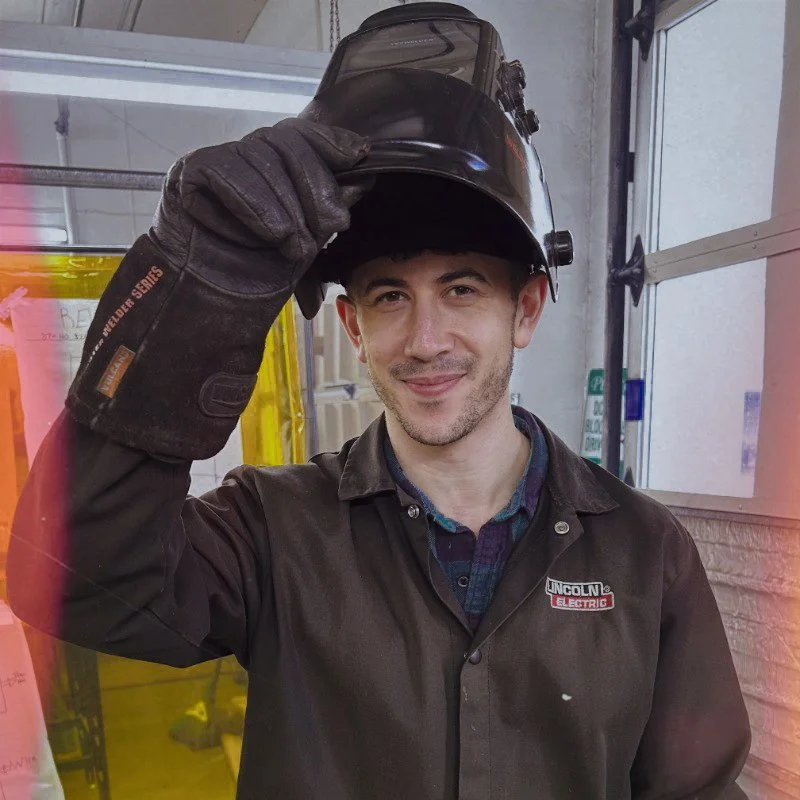
Dean Mauro grew up watching people choose independence because working for someone else never quite fit.
His father built his own business. His grandfather did the same. On his mother’s side, uncles followed similar paths. These were people who struggled inside traditional jobs and eventually stepped away from authority to create something of their own. Dean did not learn entrepreneurship from books or speeches. He learned it by watching how the adults around him lived. That environment shaped his instincts early.
He carried those instincts into his professional life when he joined UiPath. At the time, the company still felt young. The pace moved quickly. Responsibility spread wide. Dean wore many hats at once and felt direct ownership over outcomes. That environment suited him. He describes those years as energizing because they demanded involvement across everything that mattered. Over time, UiPath grew. Structure formed. Process layered in. After eight years, the company felt different. It had become a corporation. For Dean, that shift brought clarity. When the work slows and distance grows between effort and impact, it becomes time to build again.
The idea that eventually became Trade It started with a small frustration in Dean’s daily life. He cared deeply about investing and talked about it constantly with friends. Most of those conversations happened over Facebook Messenger. He shared ideas he believed in and trades he was making. His friends listened and responded, but they rarely acted. Even when they trusted his judgment, investing felt dull to them. The gap between interest and action kept showing up, and Dean wanted to understand why it existed.
That question led him to his first attempt at building something new. About a year and a half before Trade It became his full time focus, he approached colleagues with an idea for a copy trading app. The concept felt simple and human. Someone could receive a notification and decide, with one tap, to invest alongside him. As Dean put it, a friend could just say, “Yeah, I’ll invest in whatever Dean’s doing.” The team worked nights and weekends on the idea for six to eight months. Progress happened. Then the landscape became clear.
Copy trading already had strong players. Autopilot existed. Dub was growing quickly. There was little reason for another entrant. At the same time, Dean and his collaborators had spent years working with generative AI. That experience reframed the entire problem. Dean remembers the realization clearly. “This is stupid. Why are we trying to make a third copy trading app. Let’s do what we know and stick a Gen AI layer on top of the brokerages.” That moment reset the direction completely.
Working nights and weekends began to take its toll. Energy thinned. Focus fractured. Eventually, the team reached a shared understanding. Building this future required full commitment. They quit their jobs and went all in. The original group included four people. Life intervened. One moved to another country and welcomed a child. Another departure followed after differences in direction surfaced. What remained was Dean and his co founder, carrying the vision forward together.
Trade It formed around a clear and specific insight. Dean explains it simply. “We take your brokerage and we make it available everywhere.” He believes most trading decisions do not begin inside brokerage apps. People rarely open those apps intentionally. Inspiration shows up elsewhere. Articles. Conversations. Curiosity sparked by context. Dean offers examples that feel obvious once spoken. If someone reads about Tesla’s Optimus robot, why should investing require leaving that moment. If someone is talking to ChatGPT and feels conviction about Amazon, why should action live somewhere else. Trade It exists to collapse that distance.
Dean sees generative AI as a force that reshapes how people interact with tools. He believes experiences will move away from isolated apps and toward central hubs. In that world, tools become absorbed as skills rather than destinations. Trade It aims to build that layer for investing. Wherever people read, think, or engage, investing becomes present in the moment.
The first year building full time brought a mental shift. Dean admits he began with a belief many founders share. Build something well. Put it in front of people. Results follow. Experience taught him something else. “Success is just the accrual of a hundred failures.” He describes the process with clarity. Build something. Ninety nine percent misses the mark. One percent remains. Build again. Keep that one percent. Over time, those retained lessons accumulate into something real. That realization changed how he approached the work.
Scrappiness defines daily life at Trade It. Dean struggles to identify a single moment because everything feels immersed in it. The team runs work through Discord and GitHub. When something breaks inside an open source library, Dean steps directly into the code. He opens pull requests. He pushes changes forward himself. Ownership feels total.
Design introduced its own challenges. Dean invested in several design firms, expecting expertise and guidance. Instead, he found himself spending weeks handholding, explaining what needed to be built and why. Eventually, he chose a different path. He embraced AI tools like Higgsfield to generate imagery and materials internally. Speed returned. Control returned. Learning replaced frustration.
The long term vision for Trade It reaches back to the early internet. Dean remembers a time when nearly every website featured a Buy on Amazon button. Books, blogs, and reviews all pointed to the same action. One click. That ubiquity changed behavior. Dean describes Trade It in similar terms. “We want to be the Buy on Amazon button for investment.” Anywhere people read or interact, investing should exist in context.
Beneath that product vision sits a deeper concern. Dean worries about how people build wealth over time. He points out that the average person retires with around eighty thousand dollars, a number he sees as deeply insufficient. He worries about the future of social security. Trade It exists to bring investing into daily life so it feels visible and approachable rather than distant.
When asked what advice he offers aspiring founders, Dean answers plainly. “It takes longer than you think.” He reflects on the culture surrounding entrepreneurship. Speeches. Social feeds. Headlines about rapid success. He describes much of it as performative. The real journey stretches further. Failure arrives in ways that feel deeply uncomfortable. It forces people to question everything. The pull of stability grows stronger. Dean emphasizes persistence and patience. Progress arrives through accumulated lessons rather than dramatic moments.
The most meaningful advice Dean received came from literature. He recalls reading Ayn Rand when he was younger and encountering a line that stayed with him. “Happiness is the greatest agent of purification.” He applies that idea directly to building a company. Dark moments appear. Exhaustion builds. Pressure compounds. Without balance, the work becomes difficult to sustain.
Instead, Dean learned to build his life alongside the company. Sundays matter to him. He drives to Rahway, New Jersey, and takes hip hop dance classes simply because everyone in the room wants to be there. For a few hours, the pressure lifts. Movement replaces rumination. That rhythm gives him space to keep going when progress stretches longer than expected.
Dean no longer believes in short timelines or clean arcs. Trade It continues to evolve through retained lessons, scrappy execution, and belief in contextual investing. The company reflects the same values that shaped his upbringing. Independence. Ownership. Patience. Build where people already are. Reduce friction between curiosity and action. Stay present through uncertainty.
The work continues, shaped by what he has learned by doing it. Dean Mauro builds Trade It with an understanding that progress compounds quietly, one retained lesson at a time.
Thrive builds highly vetted peer groups for founders. Want to learn more?
