
They Were Expecting Term Sheets. Then the World Closed
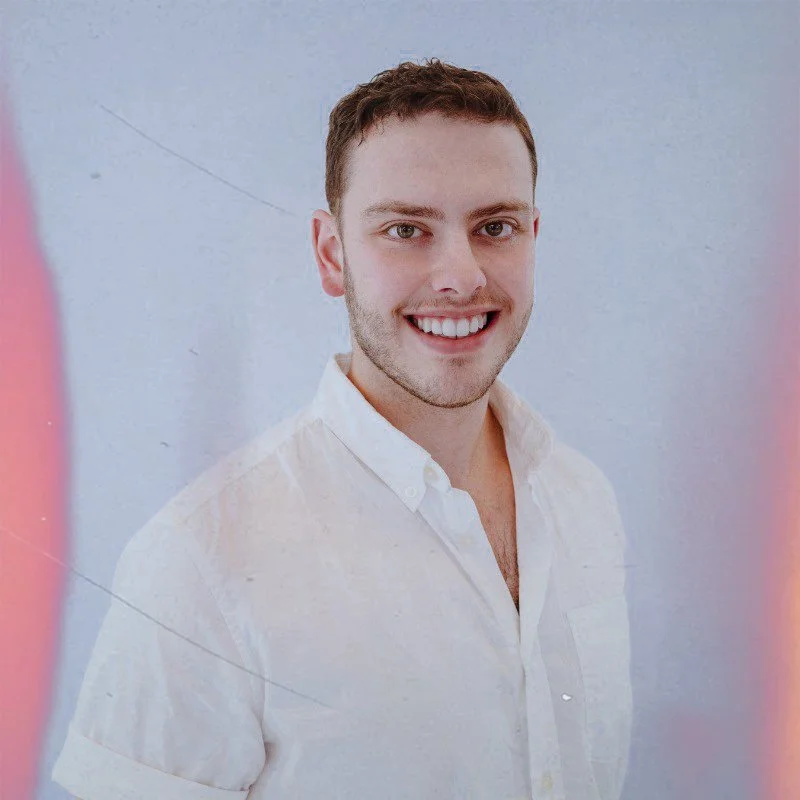
Growth changes the shape of ambition. What begins as a desire to make an impact slowly turns into a test of endurance. Somewhere along the way, the question shifts from can this work to who do I need to become to make it work.
For Noah Palansky, that shift started early.
When he was thirteen, he started a charity to help kids affected by cancer fight back . He remembers wanting to do something that made an impact. The idea of impact mattered more than the form it would take. As he worked on the charity, he began paying attention to who in the world had the capacity to create the largest ripple effects. Who could change how people operate. Who could bring products to life. Who could give back in meaningful ways.
It became clear to him that entrepreneurs held that leverage . He worked with a couple who were successful and philanthropic, and watching them shifted something inside him. They were able to achieve for themselves and for their community. They inspired change, sat on boards, gave back. That model felt powerful. He began to think that if he wanted the single biggest impact with his life, that was the path.
That instinct toward impact eventually met a fascination with technology. Noah always liked the idea of building at the intersection of marketing and technology . Marketing, in his words, gives you the ability to change the way people think and feel and behave. Technology for marketing gives you the ability to build a better megaphone. If you can build the tool that shapes how messages reach people, you can shape behavior at scale.
He went to school for business, landed an internship in marketing, then dropped out and became head of marketing at a startup . He ran their marketing team for about a year. He loved the startup side of it. But running one function inside a company was not enough. He wanted something broader. So he went back to school and earned a computer science degree.
The idea for Taiv came from a moment most people would ignore.
He was sitting in a bar watching live sports when the broadcast cut to commercial break. The ad that appeared was for another national restaurant chain telling viewers they could get cheaper beer somewhere else . It struck him immediately. That is probably not the right thing to be showing here.
As he dug into it, he realized live TV inside venues was one of the last frontiers of untargeted advertising. Generic ads. No context. No tailoring. Just noise . Meanwhile, across the broader market, advertising was shifting toward customized, relevant messaging.
That contrast felt like opportunity.
So he founded Taiv with a simple premise. Build technology that can detect and replace live TV commercials inside venues with targeted content based on who is watching the feed . Instead of everyone seeing the same generic ad, viewers in a sports bar might see drink specials, events happening in that venue, or relevant promotions from advertisers. If an advertiser runs a targeted spot, the venue gets a cut.
It is a marketplace. Venues on one side, advertisers on the other . The technology is installed in venues, generally for free. Advertisers pay for targeted placements. Revenue is shared back to the venue. Venues gain control and a new revenue stream. Advertisers gain access to a hard to reach audience during premium live content.
The company started in 2018 and launched in April 2021 . By the time it reached market, it had already passed through one of the most volatile periods in modern startup history.
Noah went through Y Combinator in winter 2020 and lived in Mountain View as COVID began to break out . For someone from a small Canadian town without a deep founder network, YC was transformative. He describes it as night and day. Being surrounded by peers of the highest caliber pushed him to set his ambitions higher and rethink how he iterated on product and talked to customers .
Then the world shut down.
Taiv was raising a round and nearing the final mile. Partner meetings were happening. Term sheets were expected . Then COVID hit. The NBA stopped its season. The NHL stopped its season. Sports bars across North America closed their doors . The same venture firms that had been close to saying yes pulled back. Timing was terrible.
Overnight, the company went from expecting to be well funded and growing its customer list to having customers closed, revenue uncertain, and investors unwilling to fund .
He says they had to flip the business on its head. They became scrappy. They bootstrapped on very little for about a year . A couple investors still believed and put in more money, but mostly the team stretched every dollar.
The biggest change was the business model. Originally, restaurants paid monthly to show their own drink specials and events. Coming out of the pandemic, that would not work. So Taiv shifted to an ad supported model where restaurants could start for free . The assumption was that venues would want an extra revenue stream as they reopened, and advertisers would value targeted exposure. That shift was key to finding product market fit .
When asked if that period was the biggest challenge he has faced, he pauses and then acknowledges it likely was . Looking back, it may be the hardest thing they will ever have to face.
He breaks the startup lifecycle into two stages. Finding product market fit. And growth . Growth is not simple, but it is more standardized. You can bring on experienced executives. You can adopt proven playbooks. The first stage is different. What worked for him will not work for someone else. It can take years. It took them years.
Today, Taiv has about 85 employees . They have raised a Series A and are near a Series B in terms of metrics. By revenue and growth rate, it is a real business. They were one of the fastest growing companies in Canada last year and would have ranked among the top in North America if not for a technicality.
Yet the challenges evolve.
It becomes about attracting and retaining top talent. Setting product strategy. Deciding how fast to go and how big to take it. Introducing new product lines. Deepening resonance with customers.
He pushes back on the idea that product market fit is binary. There are stages. You can have a product people will buy. Or you can have a product people would give up their firstborn kid for. Those are different. His focus now is on moving from likely referrals to deep loyalty, where customers would be devastated if the product disappeared .
As the company scales, the external markers of success increase. Internally, something else intensifies.
He describes one of the hardest parts of being a founder as the inability to separate who you are from the company’s success. The company becomes you. If the company is running out of money, you are running out of money. If the company is doing well, you are doing well. And even when things are going well, you are very busy.
There is no moment where you are not all in. When things are good, you put your foot on the gas. When things are bad, you try to turn it around. From the outside, it can look exciting. From the inside, it is relentless.
His advice to aspiring founders is sobering. Treat it as a marathon, not a sprint . Expect a ten year journey. Expect most of that time to be a struggle. Make sure you are prepared for that reality. It is rewarding. You will grow faster and learn more than almost any other path. But it can be brutal, especially in the early stages .
He wishes someone had told him just how difficult and long the process would be.
The best advice he received came from Josh Simair, the CEO of Skip the Dishes . Building a company, he said, is like running hurdles. Every hurdle gets bigger. They are not brick walls. Someone in the world can get over them. But at the beginning, anyone can jump them. At the end, you need to be an Olympian.
You have to grow yourself so that you can clear the next hurdle. Look ahead. Expect the challenges to get bigger, not smaller. Figure out who you need to become to get over what is coming .
From a thirteen year old starting a charity to an 85 person company reshaping how advertising reaches live venues, the through line is impact. Not the kind that arrives quickly. The kind that demands transformation.
Each hurdle higher than the last. We’re rooting for Noah and Taiv!
Thrive helps founders get their Core Group back. Want to learn more?
