
Making Safety Travel With You
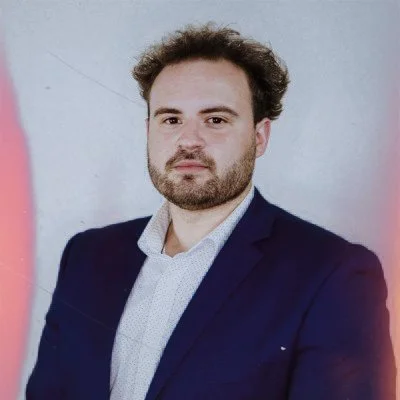
Trevon Bruch learned how to hustle before he ever learned the word entrepreneur.
Growing up in a single mother household, he became the man of the house early. Responsibility arrived fast, and with it came creativity. He found ways to make money wherever he could. Cutting yards. Changing screen doors. Selling shoes through high school. He describes it simply. “I like to hustle. It’s all about hustling.” At the time, he did not see it as a career path or identity. It was just how he moved through the world.
College was where that instinct finally clicked into something clearer. He was surrounded by people, ideas, and problems that invited creativity instead of compliance. One moment stands out to him. A friend called asking where a building was on campus and whether there was enough time to get from one class to the next. Buildings were far apart. Schedules were tight. Together, they started thinking through the problem. That conversation turned into a mobile application with GPS based campus navigation and local food deals. What mattered most to Trevon was not the app itself. It was the process. “We took something from our brain and literally put it in physical form,” he says. “I fell in love with the fact that anything you think can literally become something.”
That feeling stayed with him. The idea that creativity could turn into something tangible felt like magic. He kept building. Before Safewave existed, he focused on mobile applications, helping others turn their ideas into products. He became one of the first people in his region to build apps with a newer platform at the time, which opened doors to consulting work. Other founders brought him ideas. He helped bring them to life. Over and over, he returned to the same joy. “I fell in love with taking ideas and literally creating something that somebody can touch.”
Safewave arrived quietly, sitting on the back burner while he worked on other projects. At the time, he was building two companies at once, including a social platform in partnership with a multiplatinum record label based out of Memphis. The spark for Safewave came from an ordinary moment. He was asleep when a fire alarm went off. Nothing was wrong, but the experience stayed with him. “I thought to myself, what if the house is on fire and what if I didn’t hear that fire alarm?” That question led somewhere unexpected. “Well, there’s deaf people. What do people in the deaf community use in home emergencies?”
He did what most people would do. He searched online. The answers felt incomplete. One option relied on flashing lights. His eyes were closed when he slept. Another option involved a bed shaker connected to a listening device plugged into the wall. It only worked in specific places. “What if I fall asleep on the recliner? What if I take a nap on the couch?” The solutions required planning your sleep instead of adapting to real life. He kept asking why. Why could this not be wireless. Why could it not be waterproof. Why could it not move with the person.
That line of questioning led to the first version of what Safewave would become. “We basically took a wristband and made a wireless waterproof wearable device that connects to anything and everything smart.” The idea expanded quickly. Fire alarms were only the beginning. He thought about deaf mothers and crying babies. He thought about doorbells, motion sensors, and everyday alerts that rely on sound. The wristband paired to a mobile application and turned notifications into customized vibration patterns. “If it vibrates two times, somebody just text me. If it vibrates five times, it’s my baby upstairs moving.”
Safewave became a way to filter the world through haptics. A single band connected to many signals, giving users control over how they received information. Trevon describes it as freedom. The ability to stay connected without relying on sound. The ability to move through the world without missing what matters.
Building it took time. Years, not months. The company was self funded for much of its journey. Trevon and his team spent about three hundred thousand dollars bringing a wearable company to market, while competitors spent closer to two million. Half of that money came directly from founders. His co founder sold his house and paused his real estate portfolio to go all in. “If we were money motivated, we would have quit a long time ago,” Trevon says. Purpose carried them when capital felt tight.
The hardest challenges came from the technical side. Firmware, in particular, became a defining obstacle. The wristband ran its own code, separate from the mobile app. Software updates from larger platforms created unexpected issues. At one point, products were being shipped with known problems because the alternative was stopping entirely. Returns piled up. Capital burned. Quotes to fix the issue externally came back expensive and slow. “It was like fifty thousand dollars just to look at it,” he says. Instead, the team chose to learn. The firmware came from a Chinese manufacturer. The documentation was in Chinese. Progress moved slowly. “Our developer was like, let me just learn it.”
That decision took months. Five to six months of focused effort. Then, timing aligned. The week after they cleared the firmware hurdle, Safewave launched a pilot in a Finnish hospital for eleven deaf nurses. “It probably wouldn’t have worked before,” Trevon says. The work paid off just in time.
Scrappiness defined everything. Relationships mattered as much as code. A partnership with a development company emerged after nearly two years of relationship building. During a slow period for that firm, they offered their team to help. A graduating college student became the lead developer. The result was fifty five thousand dollars worth of software built at no cost, with no equity exchanged. “We paid zero,” Trevon says. “We make anything and everything stretch.”
As Safewave grew, its reach expanded. Customers now span forty three states and thirteen countries. Many use the product as an alarm clock or to support deaf mothers. Others use it in healthcare settings. Hospitals began adopting it. Businesses started asking how it could work at scale. Conversations with Amazon opened doors to deploying Safewave across factories and facilities. A business dashboard emerged, collecting data and supporting enterprise use cases.
The long term vision stretches far beyond a single device. Trevon talks about building an ecosystem. Starting in the home. Moving into workplaces. Expanding into travel. “When I go to my hotel, is my hotel partnered with Safewave?” He imagines a world where haptic notifications provide safety and awareness everywhere. Airports. Grocery stores. Cars. Emergency responders nearby. Over time, the focus narrows again to individuals. People with dementia. Alzheimer’s. Special needs. Caregivers receiving alerts when someone moves outside a defined area. Two way communication built directly into the wristband.
The vision changed his relationship with the idea of an exit. Early on, he dreamed about it. Over time, something else mattered more. “I like people,” he says. “I like people that are always counted out and overlooked.” The community Safewave serves feels familiar to him. Underserved. Secondary. Offered products that do not truly meet their needs. He wants to make sure that whoever carries Safewave forward shares that care. “I don’t want the people we’re building for turned into just dollar signs.”
When asked what advice he gives aspiring founders, Trevon does not hesitate. “Don’t think about money.” He calls money a tool, no different from networking or chance encounters. He speaks honestly about the loneliness that can come with building something. Approval fades. Support quiets. “It’s going to take you and your strength to get through it.” He urges people to believe deeply in what they are building and to keep going even if everyone else turns away.
The best advice he received centers on the customer. He draws inspiration from Steve Jobs and his insistence on vision paired with listening. “At the end of the day, if the consumer is telling you something, it’s the consumer every day.” Safewave ignored advice that would have pulled it away from its core purpose. Sound based listening devices. Weaker haptics. Higher prices. The team stayed focused on who they were building for.
Trevon continues building Safewave with that same focus. Listening closely. Stretching resources. Learning what he does not yet know. Serving a community that deserves more attention than it receives. The product started with a fire alarm in the middle of the night. It grew into something that moves with people wherever they go.
Thrive builds highly vetted peer groups for founders. Want to learn more?
